Selected Work

Selected work

Practical examples across enterprise architecture, data quality, governance and AI-enabled data consumption.

01

Building an Enterprise Data Platform for Trusted Data Operations

TRACE → SAFEGUARD → TRACK

Challenge

The organisation needed a scalable enterprise data platform capable of supporting reliable reporting, governed data operations and future analytical use across multiple source systems. The challenge was not simply to move data. The platform needed to make trust, control and maintainability part of the architecture.

Context

The environment required multiple-source ingestion, clear separation of raw, cleansed and curated data, enterprise-grade security, quality controls, lineage, governed consumption and future support for advanced analytics and AI.

Approach

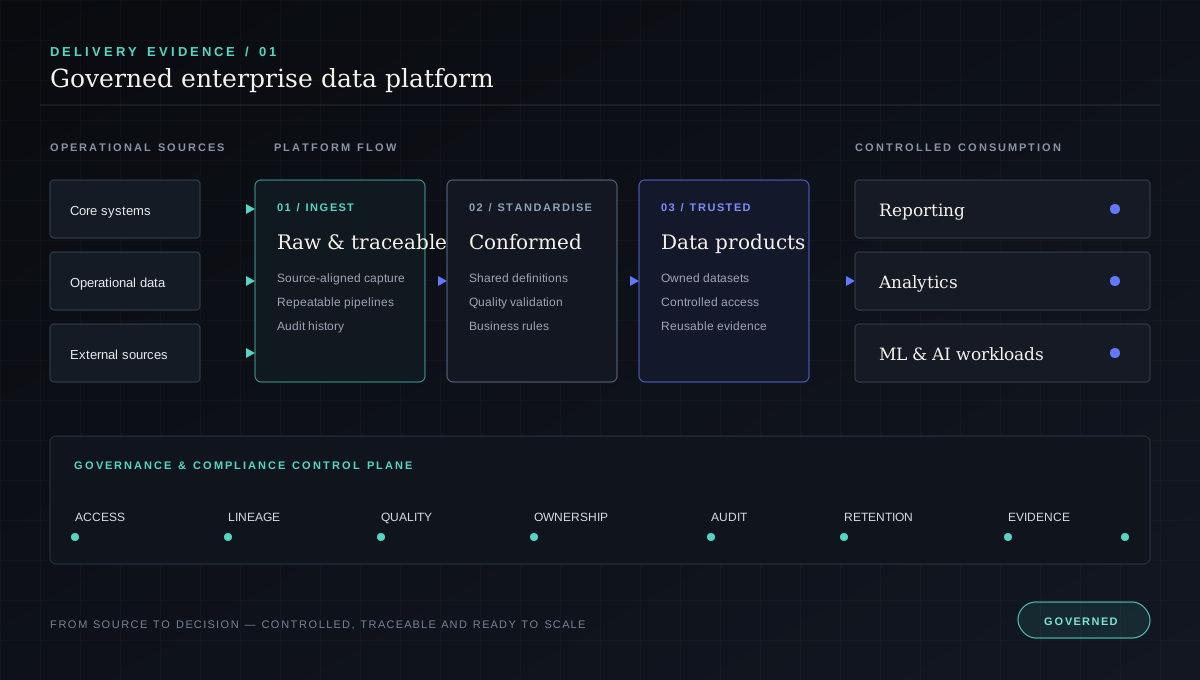
Designed a Microsoft Fabric architecture using medallion principles. The design separated Bronze for raw ingestion, Silver for cleansing, validation and standardisation, and Gold for trusted, curated consumption. Governance, security and quality were treated as cross-cutting architectural requirements.

Intervention

The architecture included ingestion patterns, data quality checkpoints, security controls, role-based access, curated data products, semantic consumption, lineage considerations, monitoring and governance-by-design.

Outcome

The result was a clearer operating model for how enterprise data should move from source to trusted consumption. The design created a foundation for more consistent quality, better control, clearer accountability, trusted reporting and scalable future data use.

02

Detecting Data Quality Problems Before They Reach the Business

RATE → SAFEGUARD → TRACK

Challenge

Data issues were often only visible after they had already affected reporting, users or downstream processes. The objective was to make data-quality failure visible earlier.

Context

The environment contained recurring issues across operational data and reporting dependencies. A traditional reactive model meant quality problems were discovered too late.

Approach

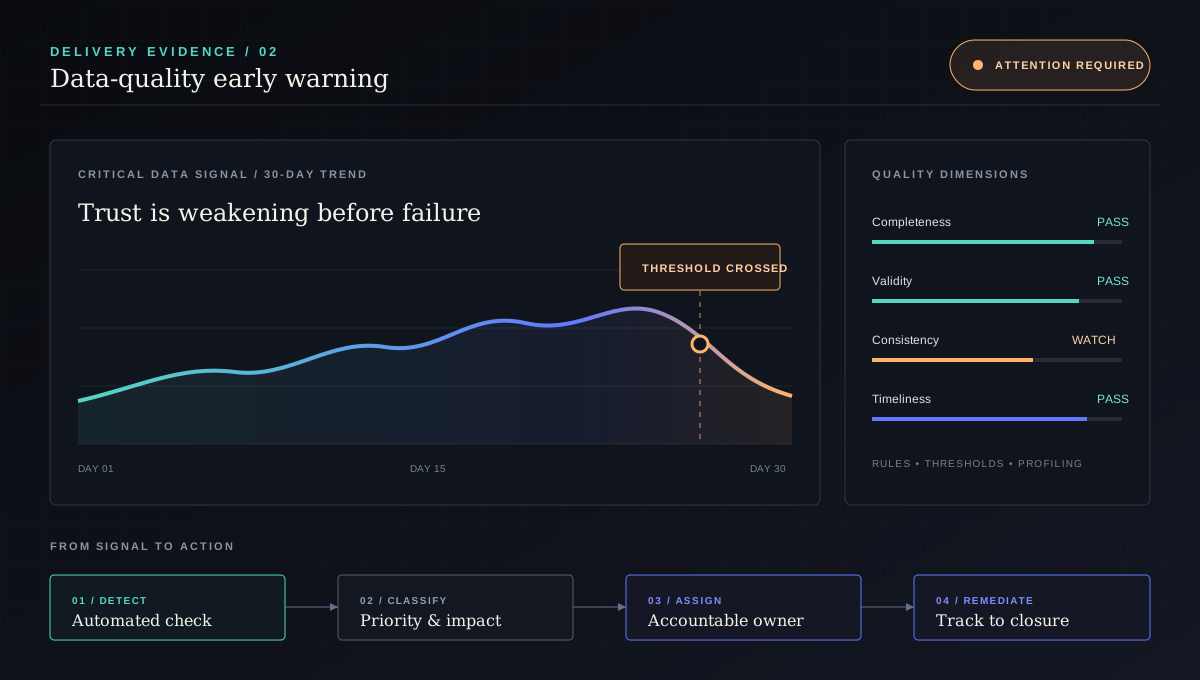
Designed and built a proactive DQ monitoring capability focused on surfacing emerging issues before business users experienced them.

Intervention

The capability brought together data-quality rules, monitoring, issue categorisation, scorecards, trend visibility, root-cause thinking, ownership and remediation.

Outcome

The approach shifted data quality from passive reporting toward active early warning. It created better visibility of where quality was deteriorating, which issues were recurring, what required intervention and where ownership was needed.

03

Moving Beyond Static Dashboards With Conversational Data

TRACE → SAFEGUARD

Challenge

Traditional dashboards require users to anticipate the question before the report is designed. The objective was to explore a more flexible way for users to interact with organisational data while keeping the data foundation controlled.

Context

Users increasingly expect to ask questions conversationally rather than navigate multiple predefined dashboards. The challenge was to enable this without separating AI from trusted enterprise data.

Approach

Built an early data agent that allowed users to interrogate organisational data conversationally. The concept explored how a governed data layer could support a more natural interface to enterprise information.

Intervention

The solution focused on trusted source data, controlled access, conversational querying, reusable data context and reduced dependency on static dashboard navigation.

Outcome

The work demonstrated a potential future consumption model where users could move from dashboard-first analytics to question-first analytics while maintaining the importance of governed, trusted data underneath.

04

Creating a Lightweight Governance Operating Rhythm

UNIFY → SAFEGUARD → TRACK

Challenge

Data issues involved multiple stakeholders, but there was no simple operating rhythm for aligning ownership, causes and remediation.

Context

Without a clear forum, issues risked becoming duplicated, unresolved, repeatedly escalated and disconnected from ownership.

Approach

Introduced a lightweight governance forum focused on practical issue resolution. The forum was intentionally designed to create decisions, not bureaucracy.

Intervention

The operating rhythm enabled stakeholders to align on the issue, confirm ownership, agree root cause, propose fixes, prioritise remediation and track action.

Outcome

The approach created a clearer mechanism for accountability, issue resolution, stakeholder alignment, practical governance and remediation ownership.

Your data should be an asset before it becomes a liability.